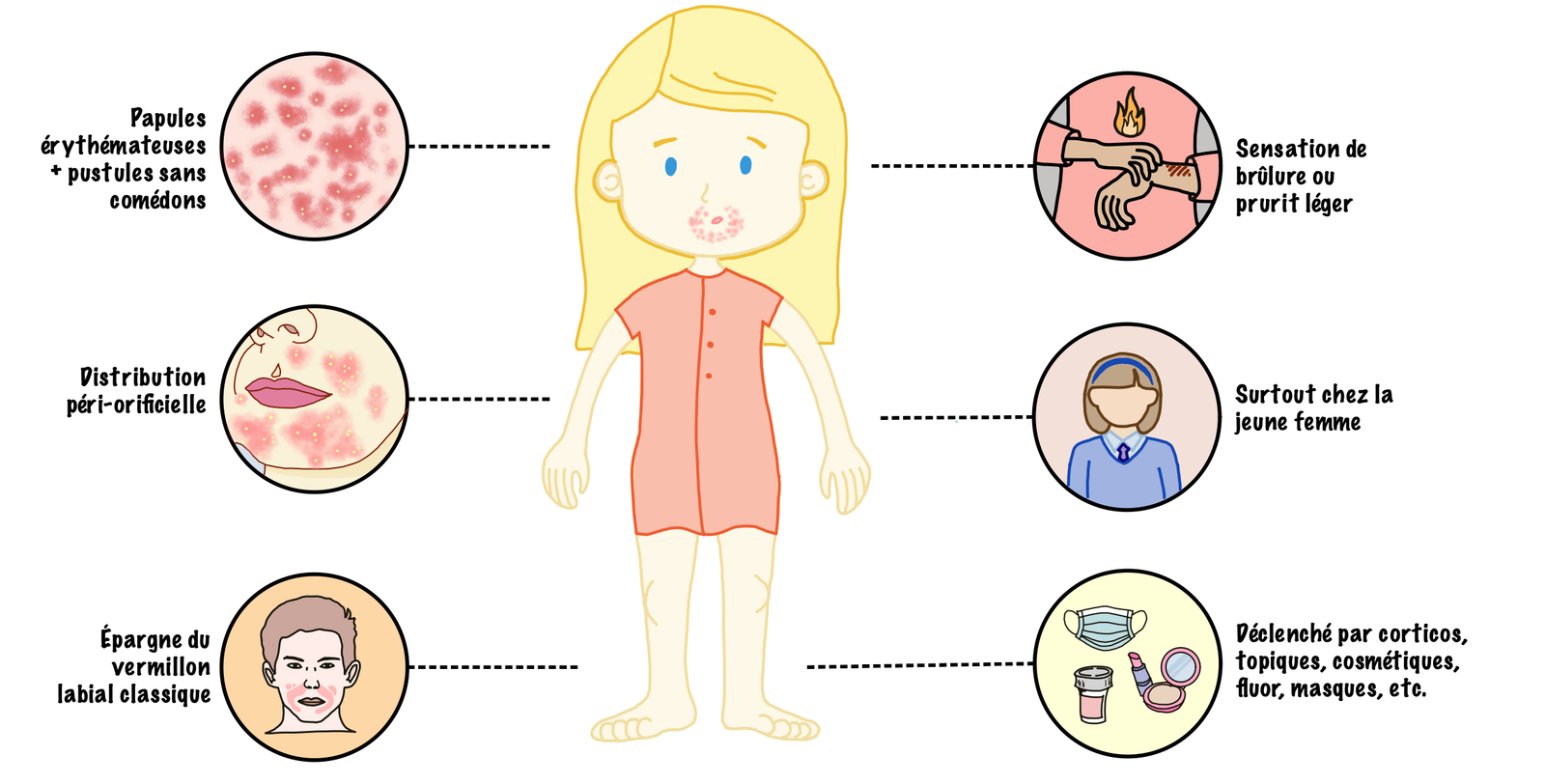
• Begin with “zero therapy”: minimize facial products, particularly cosmetics and occlusive preparations. This alone may resolve mild disease.
• Discontinue facial topical corticosteroids. Gradual tapering may be appropriate after prolonged/potent steroid exposure because abrupt withdrawal can produce a rebound flare. Do not restart the steroid because of the rebound.
• Medically necessary inhaled or intranasal corticosteroids should not simply be discontinued; rinsing the face and mouth after use may reduce cutaneous exposure.
• Mild/localized disease: topical metronidazole 0.75-1%, topical erythromycin, or pimecrolimus 1% BID, typically for several weeks.
• Pimecrolimus may be particularly useful in corticosteroid-associated disease.
• Moderate-to-severe, extensive, or refractory disease: an oral tetracycline, commonly doxycycline, generally for approximately 4-8 weeks, with duration individualized according to response.
• Doxycycline is used primarily for its anti-inflammatory activity; adverse effects include photosensitivity, gastrointestinal upset, and pill esophagitis.
• Avoid an automatic prolonged high-dose doxycycline → maintenance-dose regimen for every patient; treatment intensity and duration should be individualized, particularly because the overall evidence base for periorificial dermatitis therapy remains limited.
• When tetracyclines are unsuitable, such as during pregnancy or in young children, erythromycin may be considered depending on the clinical context.